
Photovoltaic Yield Analysis: A Technical Guide to Solar Energy Production (2026)

The quantification of solar energy yield is a multi-variable calculation dependent on solar irradiance, cell efficiency, and systemic balance. In 2026, the transition toward high-density monocrystalline silicon and N-type cell architectures has shifted the baseline for residential energy expectations. Understanding the distinction between peak power (kWp) and actual energy generation (kWh) is essential for optimizing Return on Investment (ROI) and achieving grid independence.
Executive Summary: Solar Generation Benchmarks
- Standard Unit Output: A high-performance 450W module typically yields approximately 1.25kWh daily and 425kWh annually under optimal conditions.
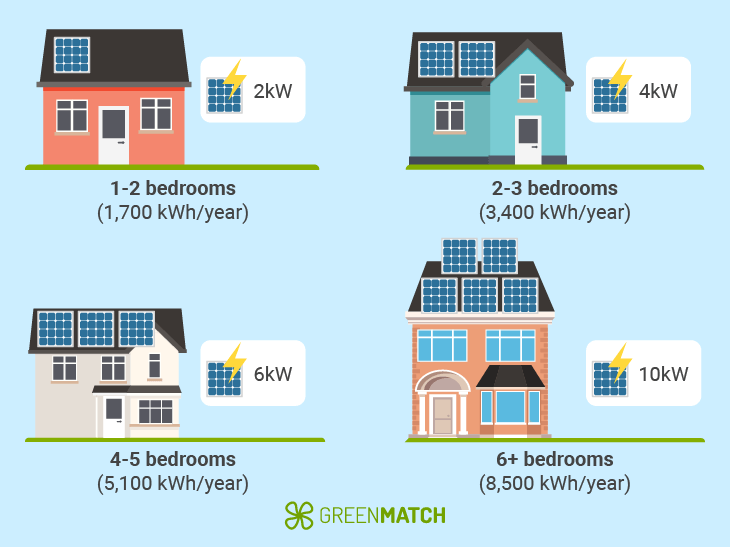
- Residential Scaling: A 4kW system serves as the benchmark for a 2-3 bedroom household, generating approximately 3,400kWh per annum.
- Conversion Efficiency: Contemporary commercial modules range from 15% to 26%, with premium variants like Maxeon 7 exceeding 24%.
- Seasonal Variance: Winter yields may experience a performance attenuation of 25% to 50% due to significantly reduced daylight hours.
Understanding Solar Output and System Topologies
Solar panel output is the net electrical energy generated over a specific period, measured in kilowatt-hours (kWh). The systemic yield is governed by the total installed capacity. For instance, a 5kW array is engineered to produce around 4,250kWh annually, while a 6kW configuration can reach 5,100kWh. These figures assume a standard performance ratio that accounts for inverter losses, thermal degradation, and cable resistance.
Quantifying Production: Daily, Monthly, and Annual Metrics
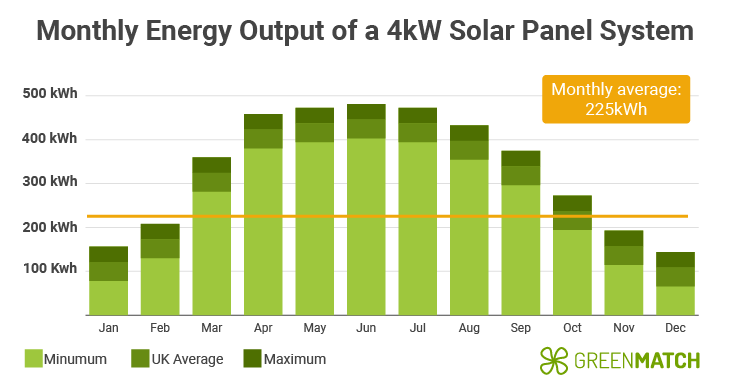
An average 350W module generates a median output of 0.72kWh per day. However, yield is not linear across the calendar year. In regions like the UK, the integration of high-efficiency modules (where efficiency is >20%) is critical to capture diffuse horizontal irradiance during overcast periods. This ensures that the system maintains a sufficient base load to offset grid reliance even during suboptimal weather cycles.
Technical Formula for Efficiency:The conversion efficiency ($\eta$) of a solar panel is defined by the ratio of maximum power output ($P_{max}$) to the input solar energy (irradiance $G$ multiplied by area $A$): $$\eta = \frac{P_{max}}{A \times G} \times 100\%$$
Projected Yield by System Capacity
The following matrix outlines the estimated energy production based on system size and household requirements:
| Household Size | System Size (kW) | Daily Yield (kWh) | Monthly Yield (kWh) | Annual Yield (kWh) |
|---|---|---|---|---|
| Small (1-2 BR) | 2kW | 4.66 | 141.67 | 1,700 |
| Small (1-2 BR) | 3kW | 6.99 | 212.50 | 2,550 |
| Medium (2-3 BR) | 4kW | 9.32 | 283.33 | 3,400 |
| Medium (2-3 BR) | 5kW | 11.64 | 354.17 | 4,250 |
| Large (4-5 BR) | 6kW | 13.97 | 425.00 | 5,100 |
| Extra Large (6+ BR) | 10kW | 23.29 | 708.33 | 8,500 |
Technical Factors Influencing Photovoltaic Efficiency
The efficiency of a solar system is influenced by several exogenous and endogenous factors:
- Module Architecture: Monocrystalline cells (approx. 20% efficiency) outperform Polycrystalline variants in low-light conditions.
- Thermal Coefficients: Solar panels are photonic, not thermal; excessive heat can actually reduce voltage and overall efficiency.
- Orientation & Tilt: Positioning panels southward at an inclination of 30° to 40° maximizes annual solar gain for northern hemisphere installations.
- MPPT Technology: Maximum Power Point Tracking (MPPT) optimizes the performance of the system during fluctuating irradiance.
Economic Feasibility and Break-Even Analysis
Investment in a 4kW system (averaging £6,600 - £8,100) yields significant long-term fiscal benefits. With electricity savings reaching up to £1,304 per annum, most residential systems achieve a Break-Even Point (BEP) within approximately 6 years. The inclusion of the Smart Export Guarantee (SEG) allows homeowners to monetize surplus energy, further accelerating the amortization of the initial cost.
Interactive FAQ: Solar System Engineering
Do solar panels function effectively during the winter?
Yes. Solar cells operate on light intensity, not heat. While shorter days reduce the total kWh yield by 25-50%, modern cells remain active. A solar battery is recommended to store diurnal energy for nocturnal consumption.
How does shading impact a series-connected solar array?
In a standard string inverter setup, shading on a single module can act as a bottleneck. Using micro-inverters or DC optimizers can mitigate this by allowing each panel to operate independently at its own peak efficiency.
What is the degradation rate of modern solar panels?
Most Tier-1 panels have a degradation rate of approximately 0.5% per year. This means that after 25 years, the system should still operate at about 85-90% of its original rated capacity.

Post a Comment